 Dr. Stephen Lesavich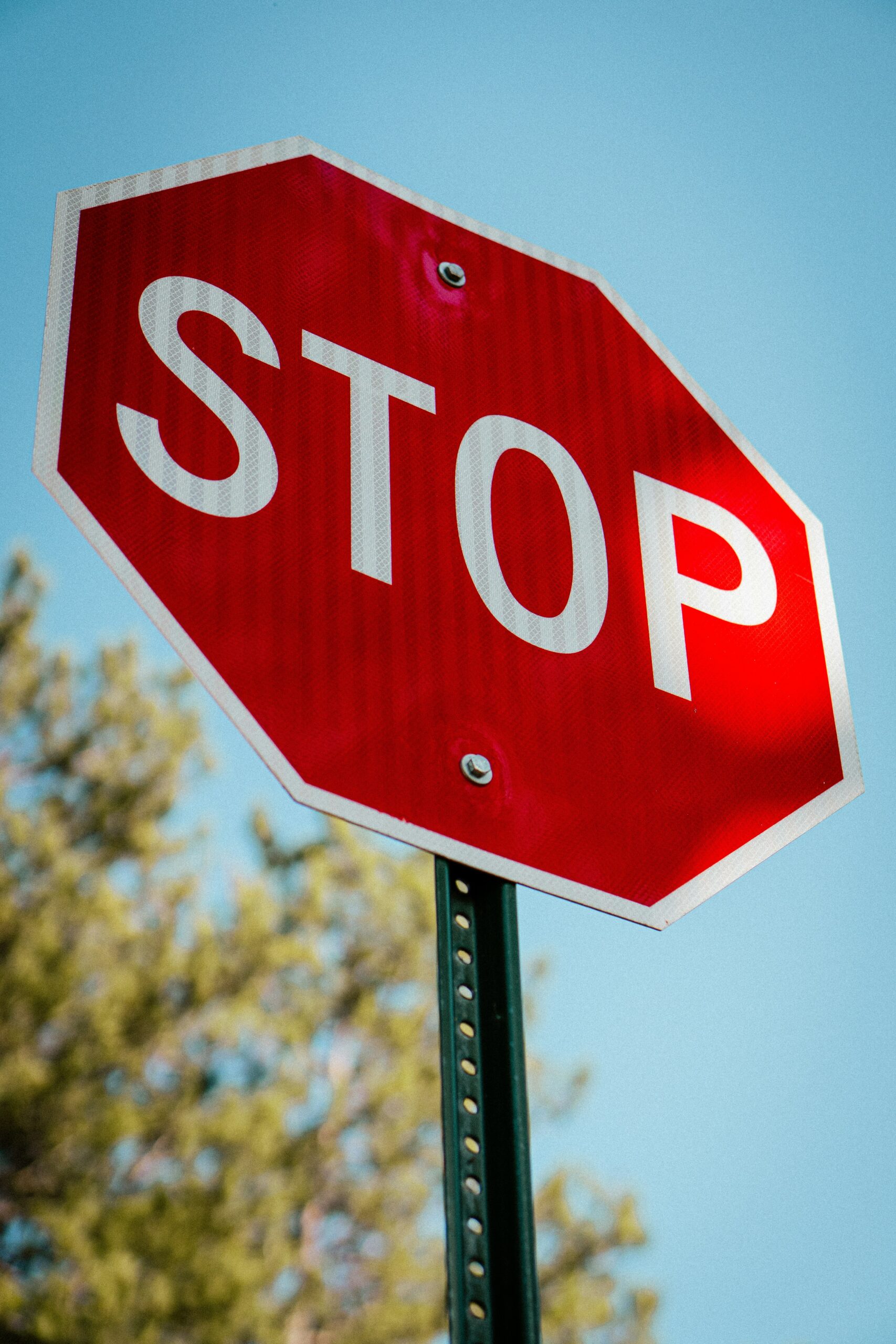
Listen to this Blog Post:
When you face a challenge, it can feel as though there is only one way to see it. As a Stop-Sign. The obstacle is right in front of you. Its meaning seems obvious. Your next move seems limited. You are prevented from moving forward.
Autumn Perrault, the BioHacking RN, a registered nurse, and a friend of mine, uses a Stop-Sign visual to discuss the Terrain Theory of medicine, when she gives talks and lectures to nursing students.
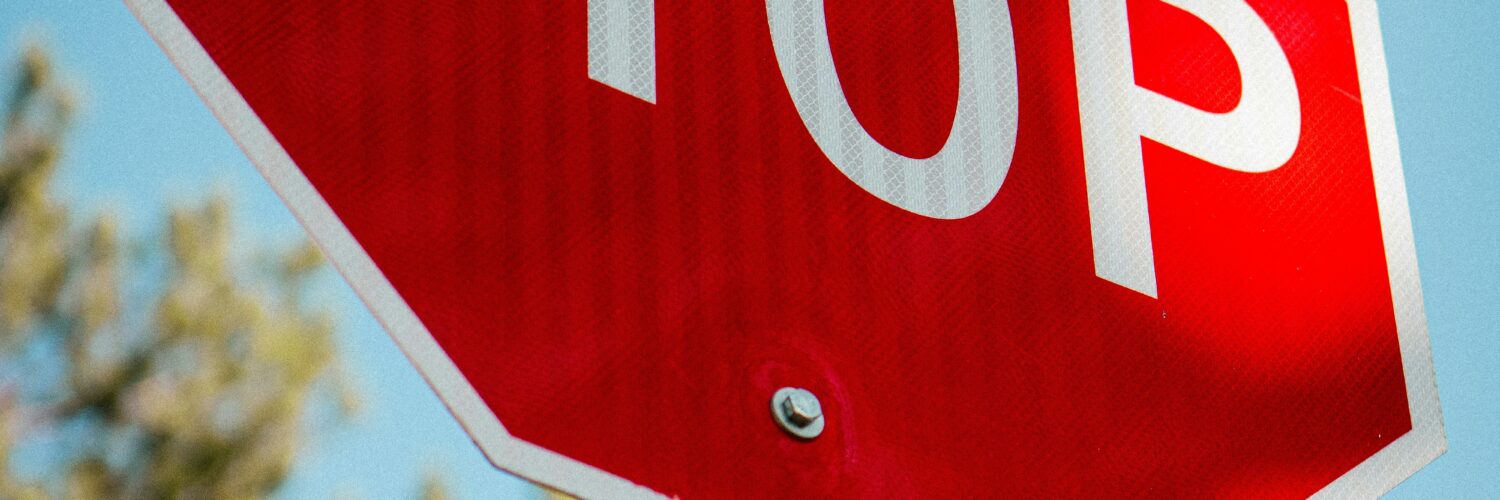
Autumn uses her Stop-Sign visual to show how much your point of observation matters. When you look straight down at a Stop-Sign from above, it appears as a thin line. View it from the side and it is still a thin line. Walk behind it and you see an unmarked octagon shape. Stand in front of it and you see the familiar octagon shaped red and white sign, with one large word: STOP.
The Terrain Theory of medicine is a point of view and observation point that a human body’s internal condition, or “terrain,” plays a central role in whether an illness develops. It places emphasis on the person and observation of their own internal “terrain” in their own body including multiple observations of terrain elements including their cells, tissues, organs, analyte levels, (i.e., concentrations of specific substances such as glucose, cholesterol, etc.), biomarkers, cell counts, blood pressure, etc. rather than focusing on a single disease-causing agent alone (e.g., an infectious agent, bacteria, virus, etc.) in their body.
In your own life, it is your point of observation of an obstacle, a Stop-Sign in your life, that matters.
Autumn’s Stop-Sign visual offers a important way to apply that broader perspective to everyday obstacles. If you look only at what is blocking you, you may miss the circumstances around it: your available resources, the people who could help, assumptions that deserve a second look.
As you view your own Stop-Signs a setback might look like a dead end from where you stand at this moment. From another angle, it may reveal a problem you can solve. From still another, it may show you a solution you can use. From still another, it may show you that the goal itself needs to change. No single view necessarily tells the whole story.
Changing your point of observation does not mean pretending the obstacle is gone. The Stop-Sign is still there. It means taking time to understand what you are facing from all angles before deciding what to do.
Look at all Stop-Signs in your life from all angles from that of a neutral observer with discernment.
A neutral observer using discernment is someone who perceives a situation, event or person from a new higher point of view and an expanded and higher-level of consciousness without forming any judgements or criticisms of the situation, event or person.
“No problem can be solved from the same level of consciousness that created it.“ – Albert Einstein
Looking at Stop-Signs in your life as a neutral observer using discernment allows you to view your Stop-Signs at that higher-level of consciousness.
The next time a challenge blocks your path, stop and move around it in your mind as a neutral observer using discernment using Autumn’s Stop-Sign visual. Look at it from above, from the side, from behind, and from the front. When you do so, you now know and understand the first view of your Stop-Sign was incomplete.
As you move around your Stop-Sign ask yourself, What am I seeing clearly? What might I be missing? What conditions around this challenge can I change? Whose perspective could help me see more? What other angles can I view this from?
Writing down the facts helps you separate what happened from what you fear might happen next. Sometimes a conversation gives you another person’s view. A walk gives you distance from the immediate pressure.
You cannot always change what stands in your way. You can change your point of observation and that may change what you do next.
How else can you use any Stop-Signs you encounter in your own life to change your point of observation?
- Acknowledge the Stop-Sign in Your Life. Acknowledge the stop sign from the perspective of a neutral observer using discernment. Ask yourself, “What do I see from where I am standing?, Why am I standing here? In one sentence for each question, describe the primary challenge this Stop-Sign represents in your life. This helps you recognize and understand the obstacle represent by the Stop-Sign before deciding how to respond.
- Walk Around Your Stop-Sign to Obtain a Complete Point of View. Deliberately examine your Stop-Sign from every possible angle. From each angle, describe in one sentence any secondary challenges you can now see. Then write down one new intuitive insight that offers a possible solution to all secondary challeges you observed. Changing your point of observation may reveal choices and opportunities that were previously hidden from view.
- Create a Solution with Positive Actions to Move Past Your Stop-Sign. Review the intuitive insights you discovered from each point of observation and each angle around your Stop-Sign. Create a solution with positive, proactive actions you can take that feels both practical and aligned with your intuition. Make a list and choose one positive, proactive step, such as gathering more information, asking for guidance, changing your attitude, establishing a boundary, or setting a new deadline for making a decision within the next 24 hours to begin moving beyond your Stop Sign. Taking even one intentional positive, proactive step each day can transform your Stop-Sign from an obstacle into a pointer to a new direction forward in your life after a short pause.
If you change your observation point when you encounter a Stop-Sign, you can easily create a significant positive impact in your own life.
Out There on the Edge of Everything®…
Stephen Lesavich, PhD
Copyright © 2026 by Stephen Lesavich, PhD. All rights reserved.
Certified solution-focused life coach and experienced business coach.
#stopsign #observationpoint #autumnperrrault #biohackingrn #stopsignvisual #visual #lesavich





Add comment